Planting after the rains
After a rain that keeps us out of the field for a day there is always a little bit of antsiness to when we can get back to farming.
Plants that needed to go in the ground have to stay in the greenhouse for longer and direct seedings are delayed.
But we always will take those challenges for some rain, especially this year after such a dry spell we had.
There was a lot of plants to be planted last week and after the rain we had a close eye on the weather to see how soon the plants could get in the ground. Fortunately Wednesday afternoon was very sunny.
After checking the soil moisture Thursday morning we decided it was good enough to plant without causing a muddy mess.
We spent all morning planting watermelons, melons, tomatoes and onions. All of the transplants were ready to go a little early thanks to the warmer spring but we had to squeeze in enough time between the rains to prepare the fields they got planted in.
Having some additional moisture in the soil from the rain reduces the stress the plants get when transplanted as the roots have much more water easily accessible than even when we irrigate them.
The onions we planted are the ones we will harvest in August and cure them. Last Fall we planted a large amount that are growing well which we will harvest mostly for spring and fresh onions while curing one specific variety.
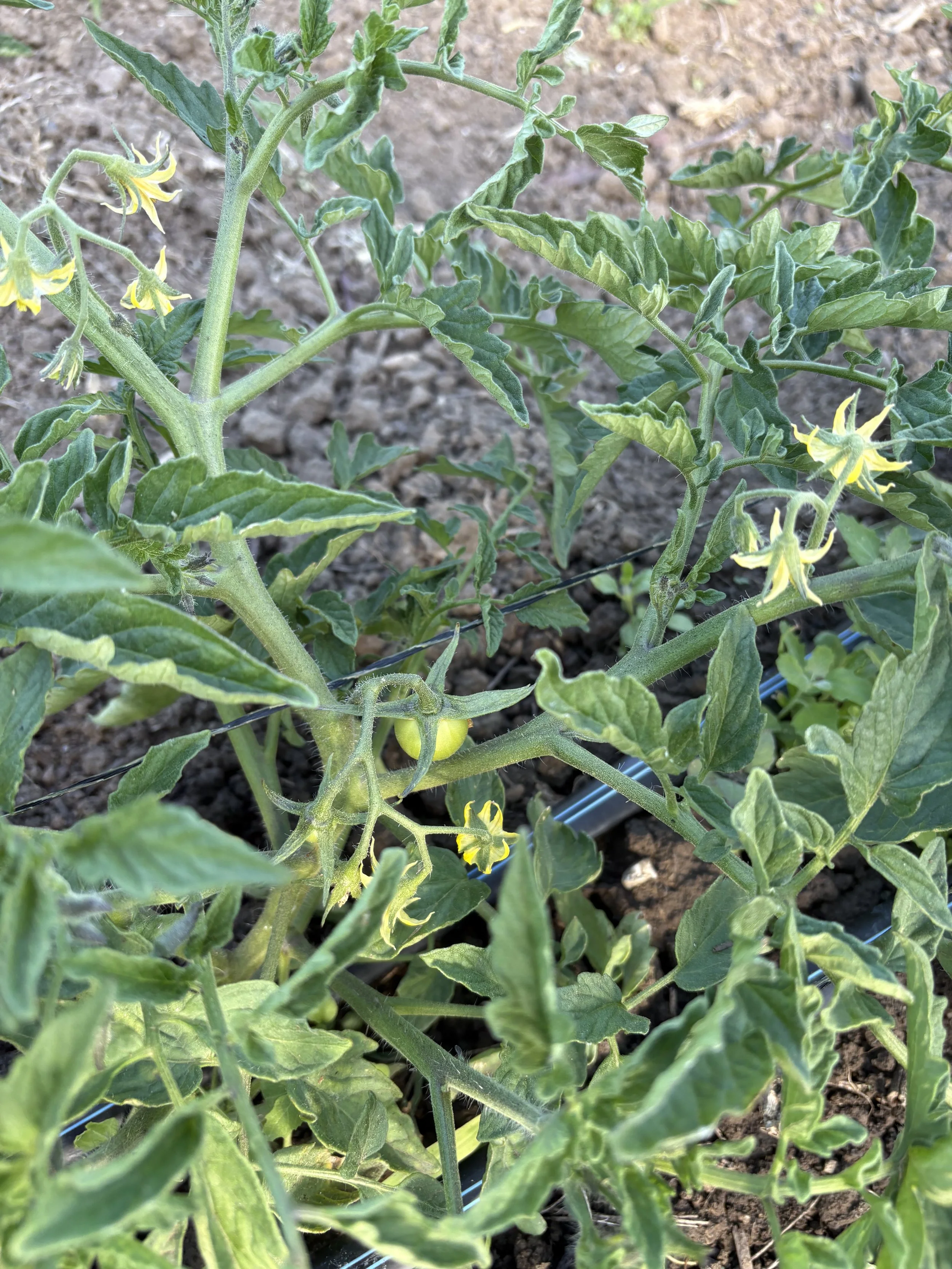
The tomatoes we planted this past week were the third succession of the season after one in mid March and the second in early April.
All the plantings are right next to each other so it’s very interesting to see the different stages of growth they are at.
The first planting has lots of flowers on the plants and there are even a few small tomatoes on there. The second planting is focusing on plant growth and is growing really well with this weather we are having.
The last couple of weeks we have started transplanting the first melons, watermelons and cucumbers for the season. They are all growing really well with a light piece of row cover over them to keep them slightly warmer and reduce the amount of wind hitting the plants.
All of the cucurbit family we grow are low vining crops meaning the plant spreads out over a few feet. Once they are fully grown the pathways between the rows are covered in the vines but before that happens lots of weeds grow there.
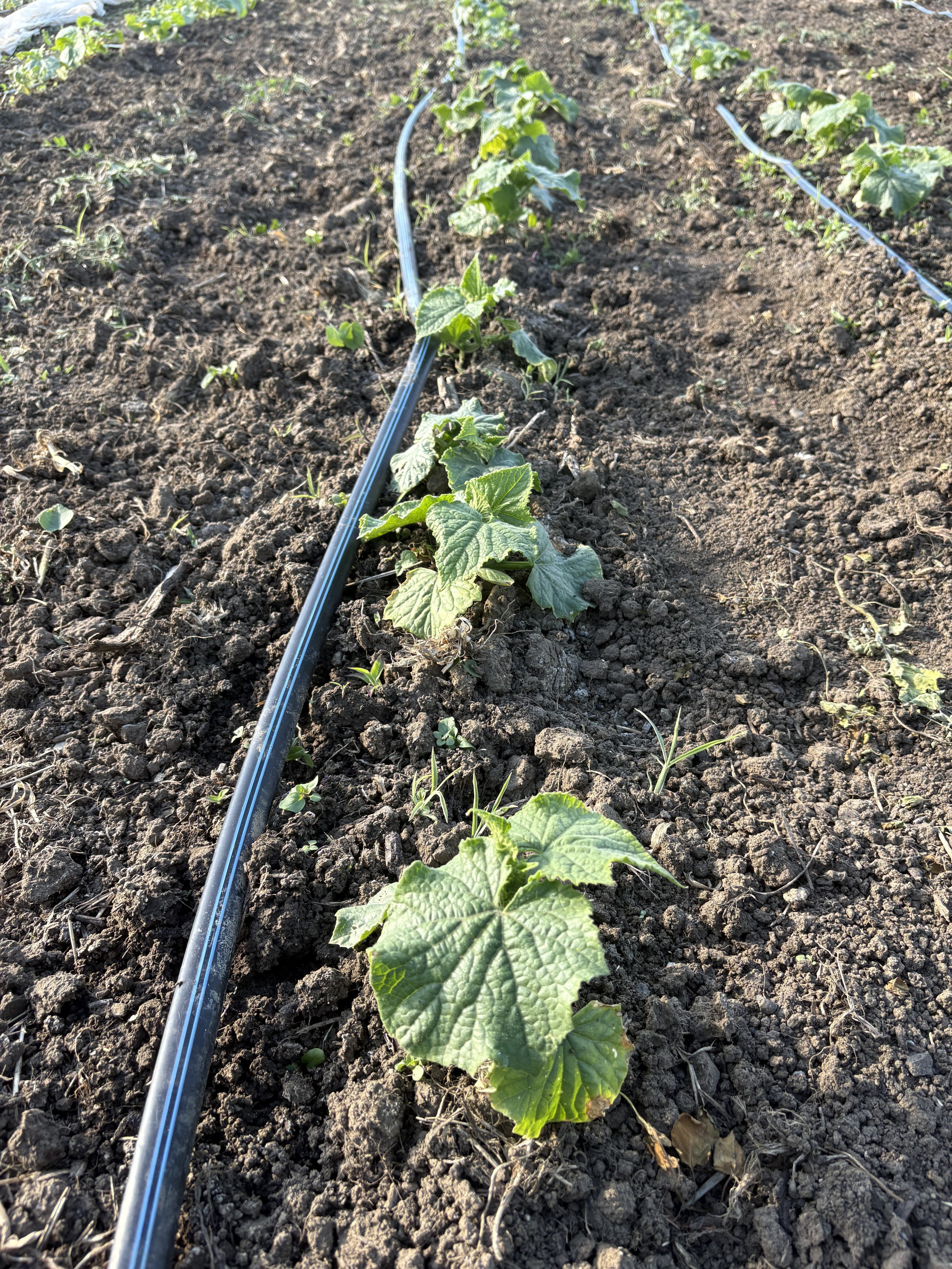
Staying on top of the weeding for those crops is vital as what they produce can be severely impacted if the weeds take off and choke out the plants.
Most of it early on is weeding the pathways with tools but we also have to hand weed right around the plants to make sure they get the best start as possible.
For the spring crops every week it seems like we are having a new crop. Last Friday we picked the first handful of bunches of beets and a couple broccolini bunches.
All the other brassicas are getting closer and need regular checking to see how long until they are ready to begin harvest.
